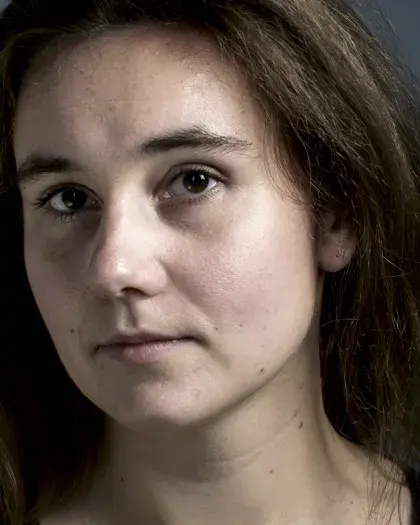
Lucrèce Borgia
by Victor Hugo
Directed by Denis Podalydès
From 1st October to 1st April

Discover the play
-
Pièce maîtresse du théâtre hugolien, œuvre « la plus puissante » de l’auteur pour George Sand, Lucrèce Borgia entre au répertoire de la Comédie-Française en 1918. « Et maintenant mêlez à toute cette difformité morale un sentiment pur, […] le sentiment maternel ; dans votre monstre, mettez une mère ; et le monstre fera pleurer », peut-on lire dans la préface. La mise en scène d’Antoine Vitez, en 1985 à Avignon, a nourri le désir de Denis Podalydès de suivre Victor Hugo dans son lyrisme pour « mieux descendre dans ce gouffre d’ombre qu’est Lucrèce Borgia, tragédie ambivalente et subversive, sorte de monstre de beauté comme d’inconvenance », pour restituer la violence poétique du drame incestueux. La pièce réclame une ampleur du geste, du sentiment, un jeu qui accepte le ridicule et l’exagération, et marie sans retenue le grotesque et le sublime.
« Hugo dans chaque scène s’emploie à tendre cet arc, à accentuer les contrastes. Cette loi fondamentale du drame, c’est bien dans Shakespeare que Hugo l’a prise. » La scène d’exposition s’ouvre sur une gondole où un groupe d’hommes débraillés, masques grotesques sur le visage, conte l’histoire de l’ignoble famille Borgia, rappelant comment les deux frères César et Jean se sont entretués pour l’amour de leur sœur Lucrèce. Mais Hugo déforme ici la réalité historique pour mieux l’adapter à sa vision dramatique en entachant Lucrèce de fratricide, muée ici en monstre pétri d’amour maternel : « Le travestissement, le masque viennent à la fois de la pièce et du désir de faire de Lucrèce moins une héroïne dramatique qu’une allégorie du paria » ajoute Denis Podalydès.- Représentation exceptionnelle en matinée mercredi 7 NOV, 14h
Au cinéma
Pathé Live le 18 OCT— Le texte de la pièce est disponible à la Boutique
LE SOUVENIR D’UNE BATAILLE reste toujours attaché à son lieu. Celle d’Hernani à la Comédie-Française offrit ainsi à Victor Hugo une salle pour sa pièce suivante, Le roi s’amuse. Mais l’échec et l’interdiction de cette pièce, accusée de glorifier le régicide, l’en chassa promptement, bloquant toute perspective d’y créer Lucrèce Borgia. Grâce à Mademoiselle George, une ancienne sociétaire du Français, la pièce est acceptée par Harel, directeur du Théâtre de la Porte-Saint-Martin, ouvert au courant romantique. Hugo fait œuvre de metteur en scène en suivant attentivement les répétitions et le jeu de ses interprètes, Frederick Lemaître (Gennaro) et Juliette Drouet (la princesse Negroni) qui, dès lors, partagera sa vie jusqu’à sa mort. Le 2 février 1833, la première est un triomphe bien que l’atteinte à la morale politique contribue à nuancer le succès critique.
Lucrèce Borgia n’entre au répertoire du Français qu’en 1918, sous la menace des bombardements qui, depuis le début du mois, perturbent les représentations des théâtres parisiens. Le contexte de guerre mondiale accentue la violence, mal perçue, de l’œuvre. Entre 1935 et 1948, les reprises sont plus heureuses, avec Mary Marquet puis Louise Conte dans le rôle principal.
Bouleversante, torturée, déchirée, parce que pour elle, « être mère, c’est l’enfer », en souhaitant le bien mais faisant le mal, Christine Fersen est la Lucrèce choisie par Jean-Luc Boutté (1994) qui poursuit ainsi son cycle sur Victor Hugo (Marie Tudor en 1982, Le roi s’amuse en 1991).
Les masques jouent, dans cette pièce, un rôle prédominant. Denis Podalydès leur donne chair en 2014 en prêtant à Lucrèce, par le jeu du travestissement, les traits de Guillaume Gallienne. Ce travestissement, qui « est moins une femme jouée par un homme qu’une femme enfermée dans une apparence qui n’est pas la sienne », est ainsi une allégorie du monstre moral cité par Hugo dans sa préface. L’inversion des genres porte, en miroir, sur le rôle de Gennaro. Il est ici une femme, incarné par Suliane Brahim. Chaque reprise d’un spectacle en alternance étant susceptible de connaître des changements de distribution, Elsa Lepoivre fut la nouvelle Lucrèce, Gaël Kamilindi Gennaro.
- Visuel : Lucrèce Borgia de Victor Hugo, 1933, avec Maurice Donneaud, Denis D'Inès, Mary Marquet – photo. Manuel frères, coll. CF
-
Mise en scène : Denis Podalydès
Scénographie : Éric Ruf
Costumes : Christian Lacroix
Lumières : Stéphanie Daniel
Son : Bernard Valléry
Travail chorégraphique : Kaori Ito
Maquillages et effets spéciaux : Dominique Colladant
Masques : Louis Arene
Assistanat à la mise en scène : Alison Hornus
Assistanat à la scénographie : Dominique Schmitt
Assistanat aux maquillages : Laurence Aué et Muriel Baurens
Documents
-
Télécharger le PDF (2.16 MB)
La pièce en images - Lucrèce Borgia
Parcours historique dans les collections iconographiques autour de Lucrèce Borgia, de Victor Hugo (saison 2013/2014), et de la thématique du travestissement à la Comédie-Française. -
 Télécharger le PDF (2.42 MB)
Dossier pédagogique Lucrèce Borgia 16/17
Dossier pédagogique autour de la mise en scène de Denis Podalydès, de Lucrèce Borgia de Victor Hugo -
 Télécharger le PDF (683.67 KB)
Programme Lucrèce Borgia 18/19
Programme de Lucrèce Borgia. Mise en scène de Denis Podalydès, Salle Richelieu (saison 2018/2019).