Les Fourberies de Scapin
Directed by Denis Podalydès
From 3 February to 19 June

Discover the play
-
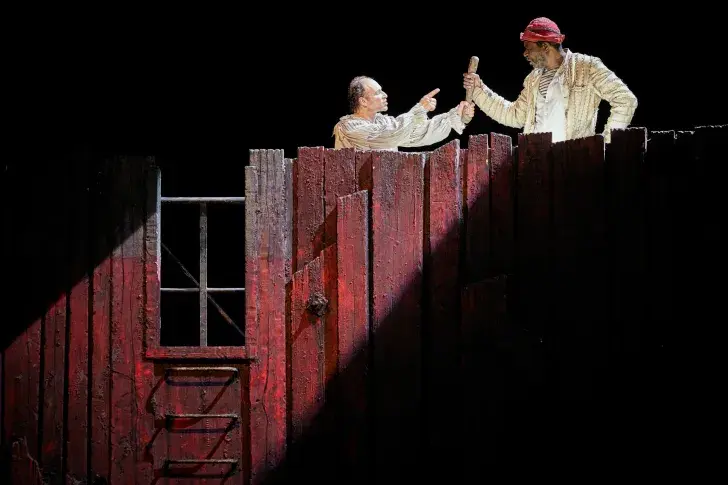
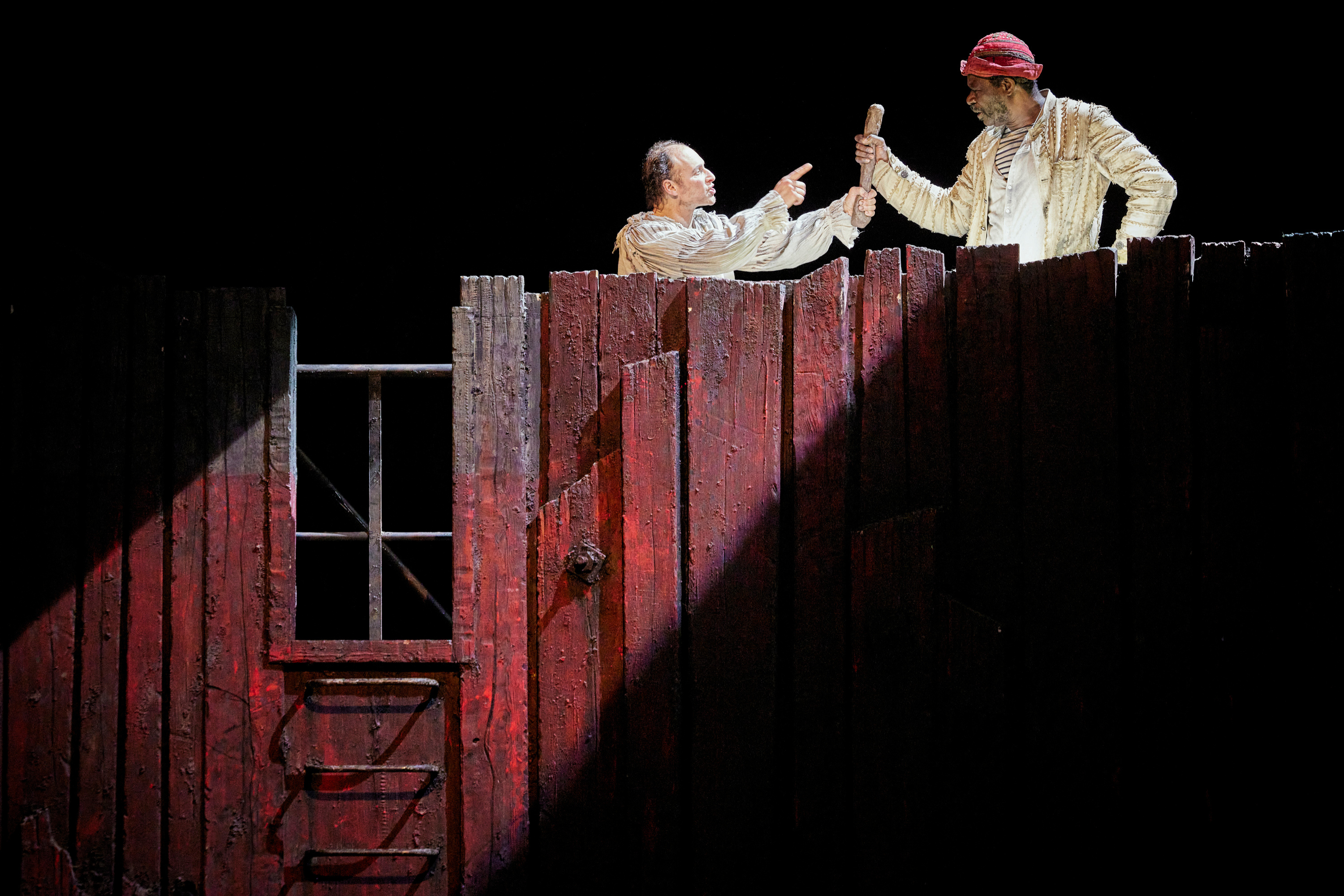
Accueil triomphal pour cette « pièce de troupe, écrite non pas pour la Cour mais pour le peuple », créée en 1671 au Palais-Royal pendant une période de travaux. Molière souhaite alors se libérer des contraintes des comédies-ballets et des comédies à machines et revient au « théâtre pur », offrant au metteur en scène d’aujourd’hui une grande liberté d’action. Ici, la scène se passe à Naples, porte ouverte à l’imaginaire maritime, tendue vers l’Orient. Dans un décor évoquant le port de la ville, deux fils aux amours contrariées, confrontés à deux pères autoritaires, s’en remettent au rusé Scapin, habité d’une folle énergie de revanche. Double de Scaramouche, l’acteur italien à la vie aventureuse fascinait Molière. « À vous dire la vérité, il y a peu de choses qui me soient impossibles, quand je m’en veux mêler » déclare le valet bouffon dont le nom, comme le rappelle Denis Podalydès, vient du verbe italien scappare qui signifie « s’échapper », « s’envoler ». S’il reçoit des coups de bâton, il en rend tout autant et déploie, dans un climat de demande de rançon et de contrariétés paternelles, une avalanche de stratagèmes et autres fourberies que l’auteur excellait à peindre. Après plus de cinquante représentations en région et sa diffusion au cinéma, cette fable joyeuse, qui voit triompher le peuple des enfants sur celui des pères, retrouve les planches de la Salle Richelieu.
Spectacle créé le 20 septembre 2017, Salle Richelieu
AU CINÉMA
6 SEPT > 17 OCTLE 24 MAI 1671, Molière choisit de donner au public sa nouvelle pièce, Les Fourberies de Scapin. Jouée sans succès, ce très étonnant échec tient en fait aux circonstances : le théâtre du Palais-Royal est pris dans des travaux interminables entrepris en vue de la création somptueuse du « clou » de la saison, Psyché, que le public de la Cour a déjà eu le privilège de découvrir et que celui de Paris attend impatiemment.
> Dans ce sac ridicule où Scapin s'enveloppe, je ne reconnais plus l'auteur du Misanthrope.
On s’interroge alors : la pièce aurait-elle eu vocation à faire patienter le public le temps de lui offrir la tragédie-ballet promise ? Sur le plan du jeu, pourtant, Les Fourberies sont assurément du grand spectacle et Molière lui-même y interprète le rôle de Scapin sur lequel repose l’intrigue. La Thorillière, « furieux porte-rapière », et la Beauval en Zerbinette ne sont pas en reste : connue pour son rire tonitruant et communicatif, c’est d’ailleurs pour elle que l’auteur a composé le rôle. Mais comme l’écrit Boileau, la pièce déçoit les amateurs de « belles comédies », sans doute est-elle trop proche d’un comique de commedia dell’arte. Conçue dans une économie de moyens scéniques pour ne nécessiter ni décors imposants ni machines, il est fort à parier que la pièce paru trop simple aux contemporains et en décalage avec l’appétit nouveau de divertissements chantés et dansés.
Un pur théâtre trop dépouillé en somme.
L’avenir donnera, comme souvent, tort au goût du siècle puisque la pièce remportera, après la mort de son auteur, d’éclatants succès. Elle est aujourd’hui l’une des plus souvent représentées du répertoire français, y compris à l’étranger. Le 20 septembre 2017, jour de la première de la mise en scène de Denis Podalydès, les Comédiens-Français l’auront interprétée 1 495 fois depuis 1680.
- Visuel : Les Fourberies de Scapin par Devéria, [1831] – Photo. Lorette
-
Mise en scène : Denis Podalydès
Scénographie : Éric Ruf
Costumes : Christian Lacroix
Lumières : Stéphanie Daniel
Son : Bernard Valléry
Maquillages : Véronique Soulier-Nguyen
Collaboration artistique et chorégraphique : Leslie Menu
Assistanat à la mise en scène : Alison Hornus
Assistanat à la scénographie : Dominique Schmitt
Documents
-
 Télécharger le PDF (4.74 MB)
Programme Les Fourberies de Scapin
Programme des Fourberies de Scapin, de Molière. Mise en scène de Denis Podalydès, Salle Richelieu (saison Molière 2023-2024). -
 Télécharger le PDF (4.35 MB)
Programme jeune public Les Fourberies de Scapin
Programme jeune public du spectacle « Les Fourberies de Scapin » Mise en scène Denis Podalydès, Salle Richelieu, saison 2023-2024
Casting
-
Hyacinte, amante d’Octave
-
-
et des comédiennes de l’académie de la Comédie-Française.