Singulis / Chagrin d'école
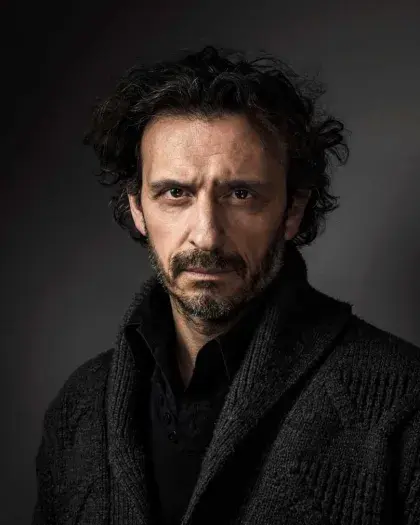
Devised and performed by Laurent Natrella
From 31 January to 18 February

Discover the play
-
Daniel Pennac était un véritable cancre lorsqu’il était enfant, et c’est à l’internat qu’il se prit de passion pour la lecture : « lire était alors un acte subversif. À la découverte du roman s’ajoutait l’excitation de la désobéissance... »
Il est depuis devenu auteur, mais aussi professeur, et il raconte : « de ma scolarité, j’avais gardé des souvenirs épouvantables, c’est atroce, la vie d’un mauvais élève : quelle douleur ! Il se trouve qu’un quart d’heure après être entré dans ma première classe, j’ai aimé le métier. J’ai préféré les enfants ».
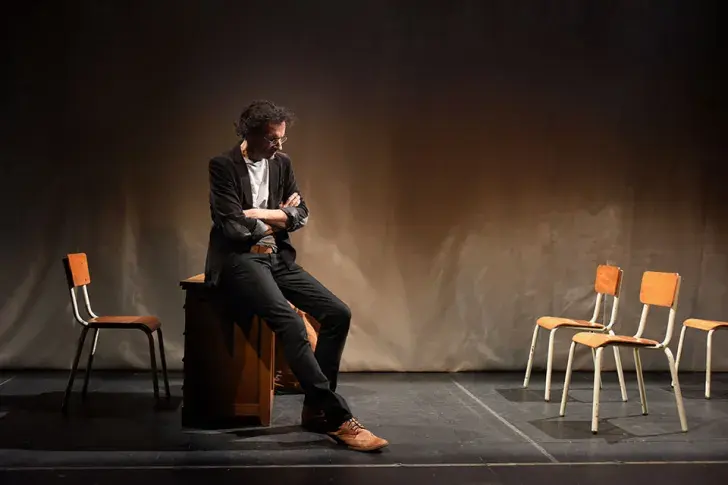
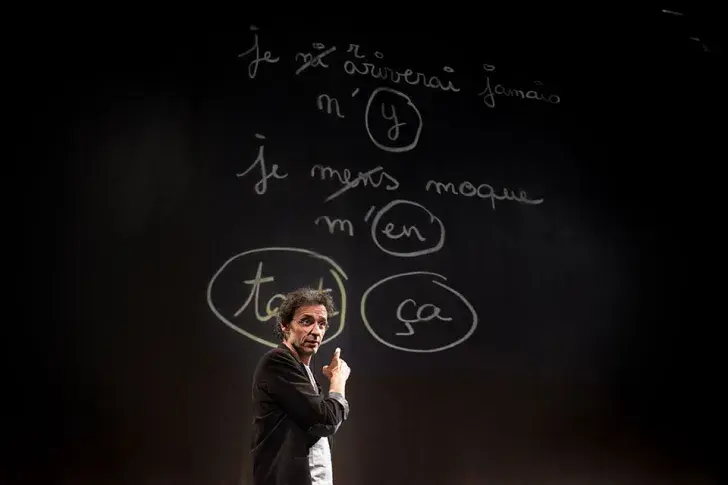
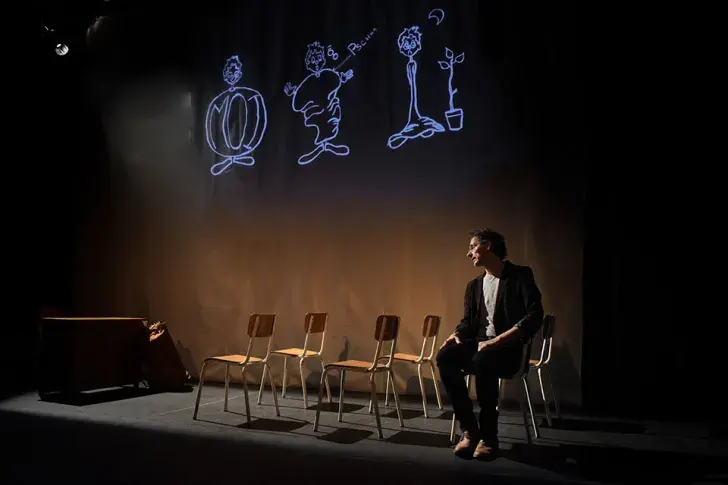
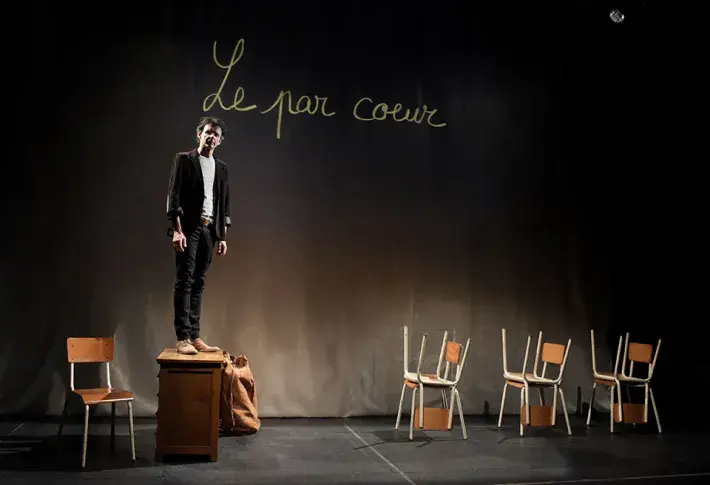
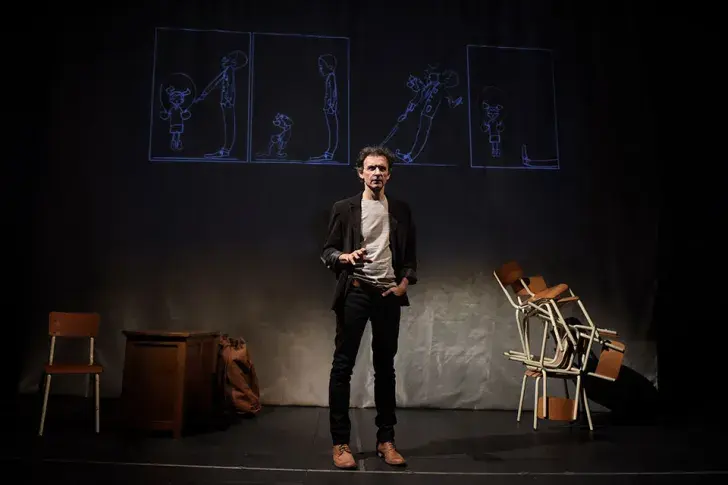
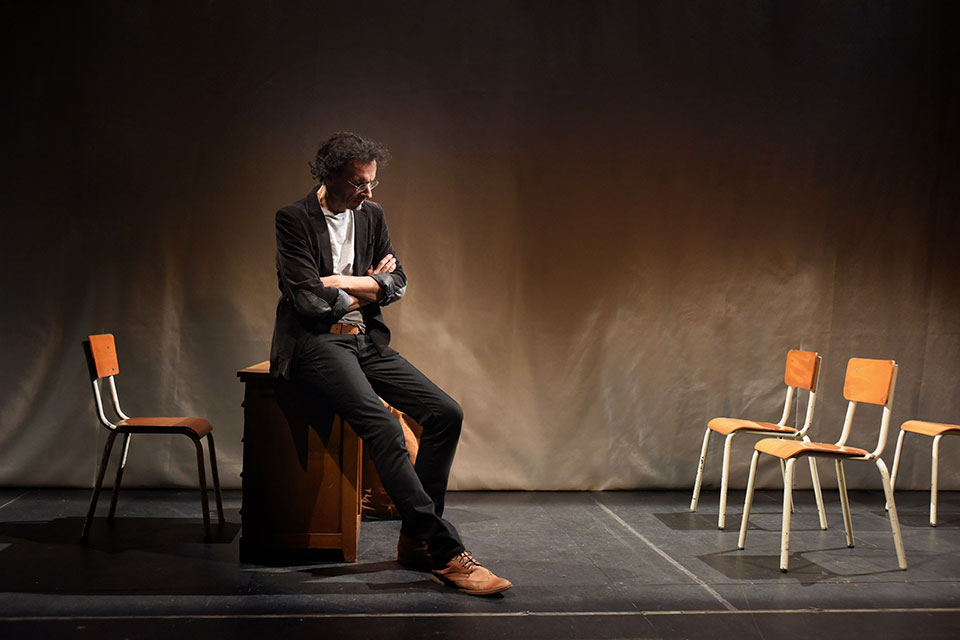
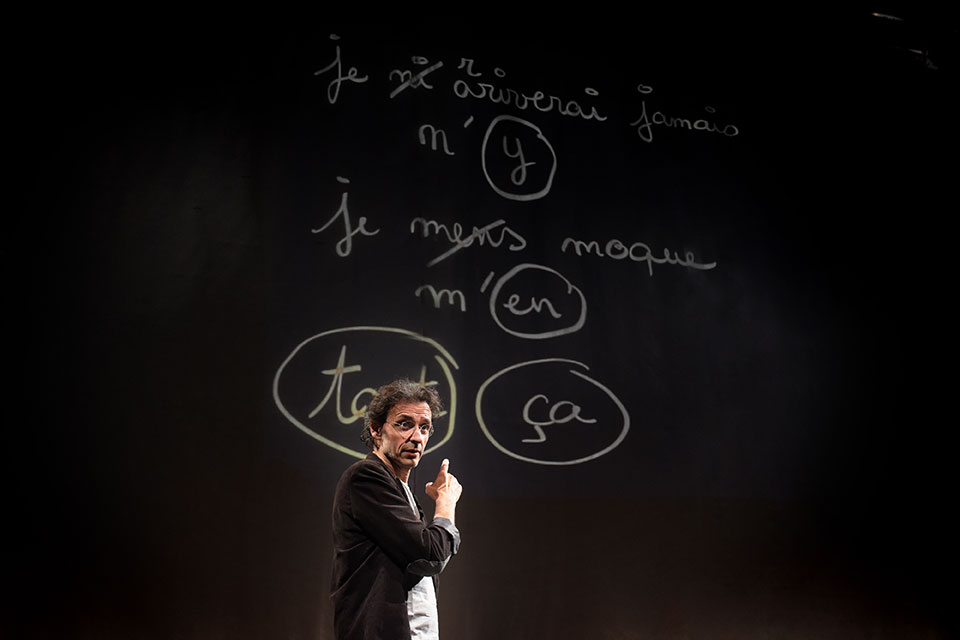
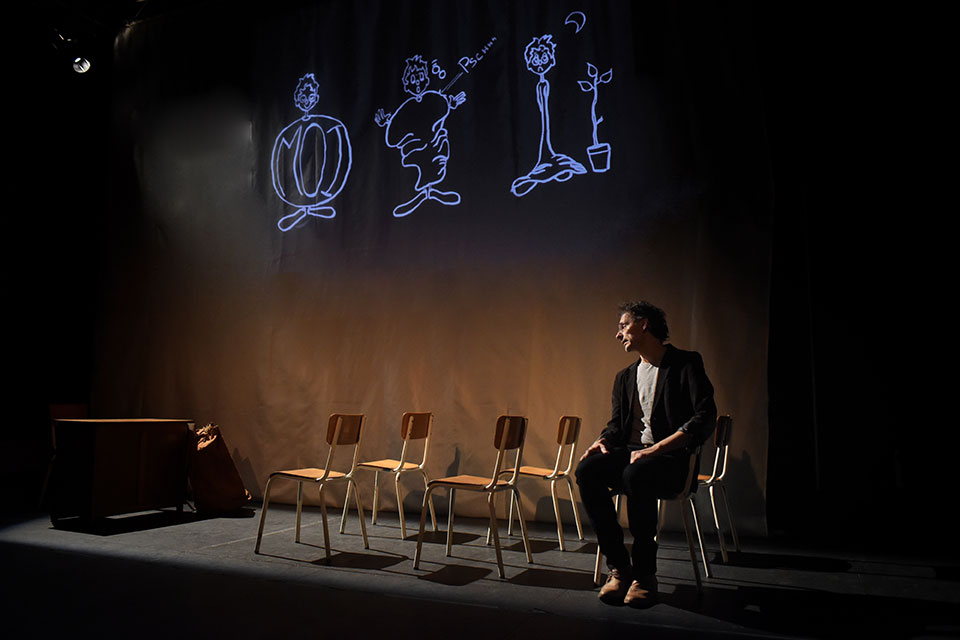
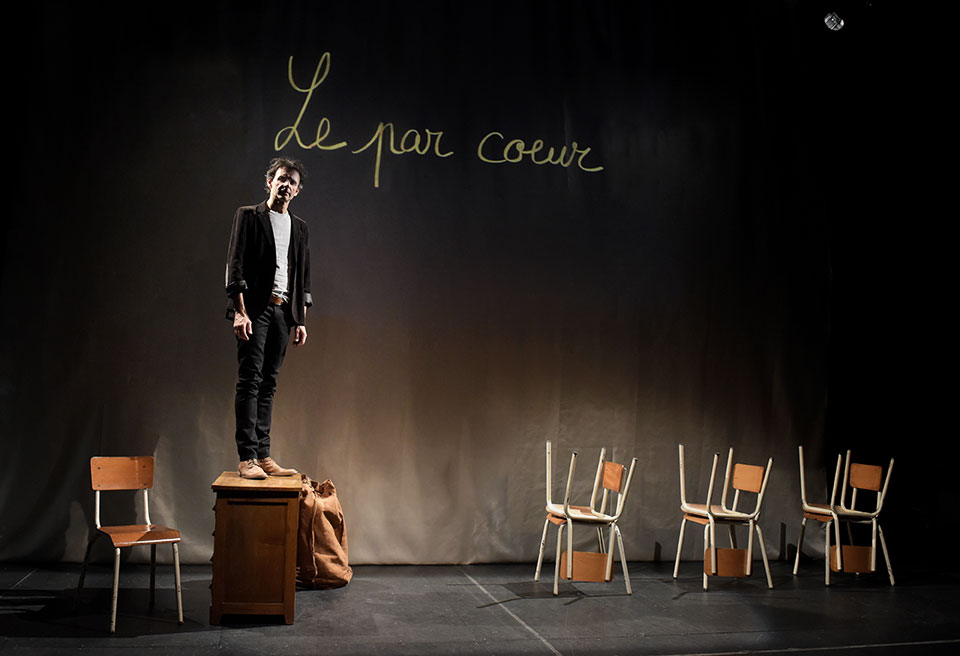
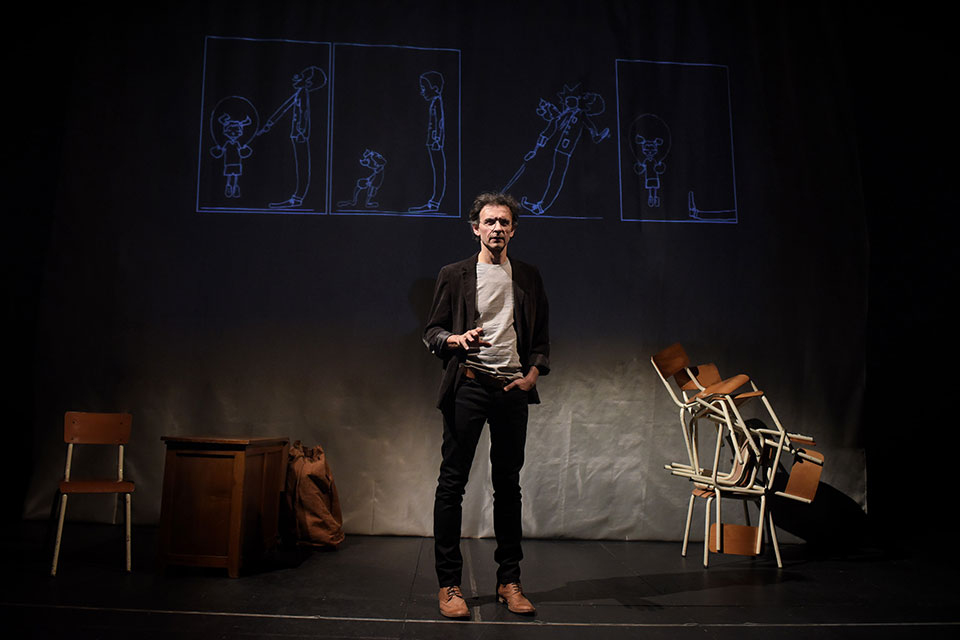
Chagrin d’école est un maillage de souvenirs personnels et de réflexions sur la pédagogie. Laurent Natrella entre dans la classe. Du tableau noir aux pupitres des élèves, il déroule le fil du roman. La leçon, d’une actualité criante, est de poésie autant que de grammaire et d’orthographe. Lui-même enseignant parallèlement à son métier d’acteur, il nous transmet dans ce spectacle son amour pour l’enfance de l’art.Le texte est publié aux éditions Gallimard.
LA PRATIQUE THÉÂTRALE DU SOLO est relativement récente à la Comédie-Française. Depuis le XVIIe siècle, l’institution se définit d’abord en tant que troupe de comédiens dont la dimension collective prime sur l’expression des individualités. Samuel Chappuzeau dans son Théâtre François le souligne dès 1674, comparant les troupes théâtrales à des « corps » politiques, comme autant de petites « Républiques ». Des comédiens, il dit qu’« ils n’admettent point de supérieur, le nom seul les blesse ; ils veulent tous être égaux, et se nomment camarades. » La devise de la Comédie-Française, Simul et Singulis (être ensemble et être soi-même), qui apparaît en 1682, assortie de l’emblème à la ruche bourdonnante, caractérise cette philosophie où chacun contribue par son talent propre à l’œuvre collective.
Point de solo… mais des solistes
Si la pratique du spectacle seul-en-scène n’est pas de mise, le « solo » que constitue le monologue est fort attendu du public et, parfois, mis en scène pour faire apparaître le protagoniste dans toute sa splendeur et en contraste avec le reste de la Troupe. Il s’agit là d’un effet du système de vedettariat qui émerge nettement au XIXe siècle.
Les pratiques solistes se développent le plus souvent en dehors de l’activité du théâtre. Les comédiens, dans des tournées personnelles programmées parfois sans égard pour les intérêts de la Comédie-Française – Talma, Rachel... ont pu partir en laissant leurs camarades en difficulté – emmènent leurs malles de costumes, mais recrutent sur place comparses et décors de fortune pour jouer les grandes scènes de leur répertoire. La représentation s’apparente alors à un récital de morceaux choisis, propre à mettre en valeur l’acteur dont le talent est d’autant mieux affirmé qu’il évolue aux côtés de comédiens de seconde zone, si ce n’est d’amateurs.
Le texte monologué se développe véritablement à la fin du XIXe siècle, grâce aux frères Coquelin mais reste aujourd’hui encore une exception. La devise, Simul et Singulis, résume à elle seule l’indispensable paradoxe pour un acteur de Troupe.- Visuel : ruche, gravure Guillaumot fils
-
Adaptation, conception et interprétation : Laurent Natrella
Adaptation et collaboration artistique : Christèle Wurmser
Lumières : Franck Walega
Son : Dominique Bataille
Documents
-
 Download the PDF (735.15 KB)
Programme Singulis : Chagrin d'école 17/18
Programme Singulis : Chagrin d'école d'après Daniel Pennac. Adaptation, conception et interprétation Laurent Natrella. Studio-Théâtre (saison 2017/2018).